|
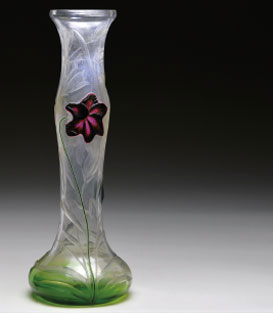
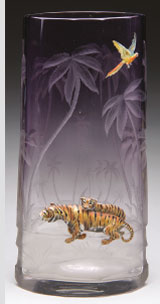
Founded by Ludwig Moser in 1857, the Moser
firm has evolved from the drab surroundings
of a single engraving studio to become the
21st Century's preeminent producer of luxury
glassware in Central Europe. Through an
international network of fine shops, Moser
sold luxury glassware to socially prominent
and wealthy patrons and included among
its customers crowned heads in Europe and
the Middle East. Even though Ludwig Moser
was recognized by his contemporaries as a
painter and engraver of significant stature,
his greatest achievement was as a glass
entrepreneur. The Moser firm's unparalleled
success was the direct result of Ludwig's
personal dedication to the production of
glassware of uncompromising quality.
During this early period, glass marketed
by Moser consisted of highly distinctive
decorative motifs applied to glass blanks
purchased from major Bohemian glasshouses.
Success abroad was insured by an extensive
network of glass merchandising centers,
while, at home, the appointment of Ludwig
Moser as "Supplier of Glass" to the Austrian
Imperial Court of Franz Joseph solidified his
position as a major Bohemian manufacturer of
artistic glass.
1895 witnessed the completion of Moser's
glassworks at Meierhofen and with it a
major shift in emphasis toward the technical
perfection of the glass melt. Associated
|
development of complementary cutting and
engraving techniques and the introduction
of new colored glass formulations became
an all consuming passion. Such dedication
to excellence was rewarded by a high level
of visibility at international competitions and
a seemingly endless procession of socially
prominent patrons.
In 1922, the Moser firm, under the artistic
directorship of Leo Moser, purchased Meyr's
Neffe Adolf Glassworks. Beginning with the
fourth quarter of the 19th century, Meyr's
Neffe, in addition to supplying cut glass
blanks to the Wiener Werkstatte association
of artists, had been the major supplier of
enameled glass to the celebrated firm of
J.& L. Lobmeyr. As a result of the combined
design and artistic resources of the two firms,
enameled glassware marketed by Moser
regained, and in some aspects surpassed, its
former splendor.
At Meierhofen, Leo Moser continued the
development of richly colored glasses and,
in 1922, was the first to introduce the
commercial production of multi-colored rare
earth doped glasses. Advanced prismatic
cutting styles designed to enhance the jewel
like properties of these new glasses won
international acclaim. During the 1920s, Moser
became a forum of contemporary design.
Uniquely designed glassware, representing
a significant departure from traditional
|

Moser product lines, was commissioned in
quantity and, in many instances, found its
way into international competitions. Artistic
glass produced during this period formed a
foundation upon which many contemporary
Moser designs are based.
Fortunately, World War II left the Moser
factory at Meierhofen unscathed and it
took little time for the Czech government to
reestablish Moser as one of Czechoslovakia's
leading glasshouses. Under Communism, the
international reputation of Moser suffered
from political censorship and the inability
of merchandisers to reliably obtain Moser
glass for their showrooms. Since the fall of
Communism and the reestablishment of a
free enterprise economy, Moser has regained
its former international presence. As it was
in the 19th Century, Moser glass retains the
marquee "Glass of Kings, King of Glass."
|